


I first wrote about this for The Resistance Archives on September 8. A lot has happened since, so here’s the fuller picture: how the war reignited, and where it stands now.
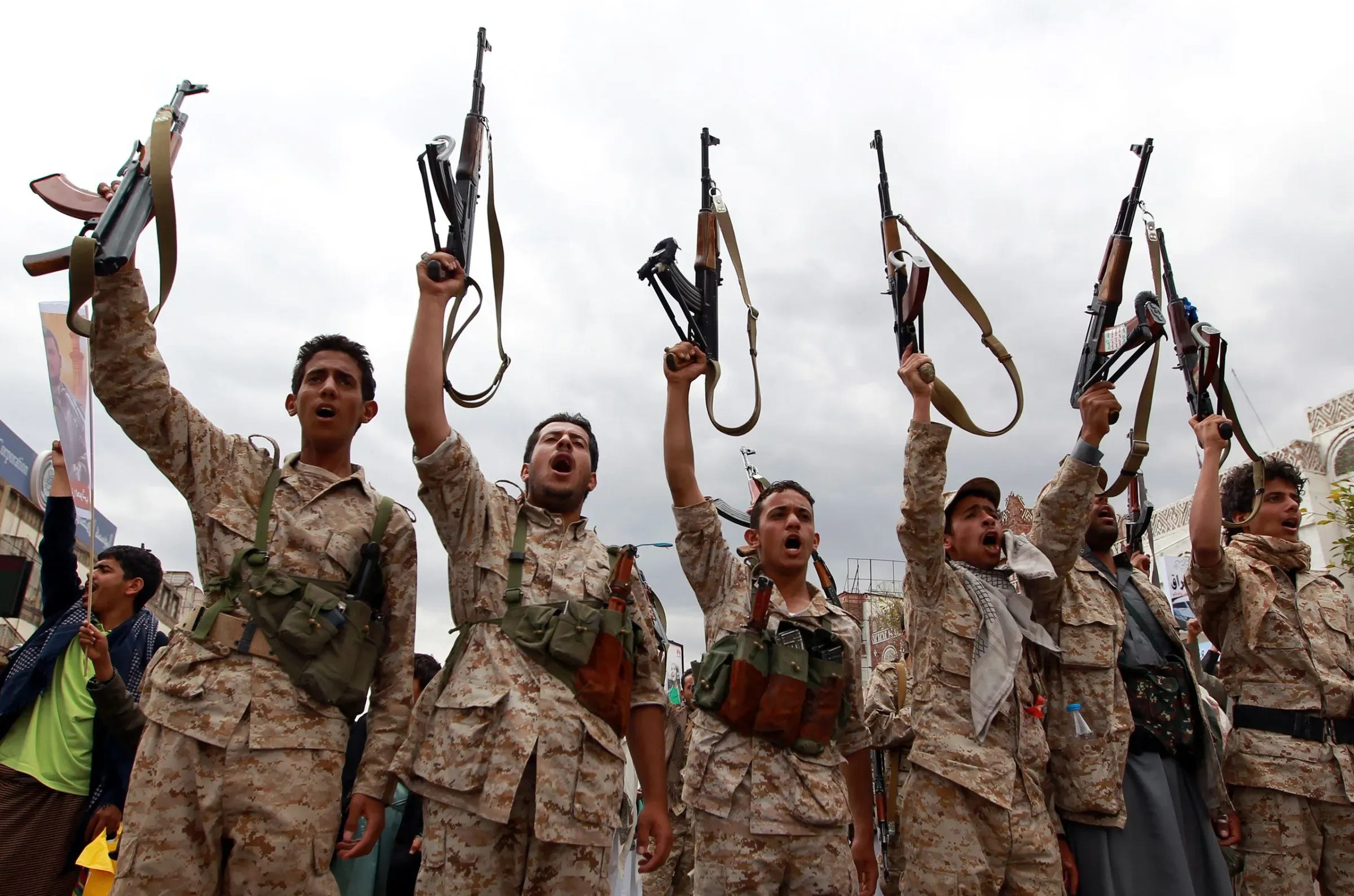
For most of the past four years, Yemen’s frontlines barely moved. The 2022 truce never became a peace deal, but it largely held the war in place, until this summer.
The groundwork was laid in January, when Saudi Arabia moved to consolidate its position inside areas controlled by Yemen’s internationally recognized government (IRG). Saudi-backed forces defeated the UAE-backed Southern Transitional Council in the south. The STC announced its dissolution, its leader was pushed out of the Presidential Leadership Council, and Emirati forces withdrew. Riyadh then began reorganizing government-aligned forces under its own command.
On paper, the anti-Ansar Allah camp was more unified than at any point in the war. In practice it was still a patchwork of unionists, former secessionists and forces built by different regional backers, held together by a common enemy more than any shared vision for Yemen.
Talks between Riyadh and Sanaa had stalled over salaries, economic arrangements, and control of ports, crossings and other infrastructure. The wider confrontation between Iran, Saudi Arabia and the United States only added pressure.
In July, it broke open. On July 13, an Iranian aircraft carrying an Ansar Allah delegation tried to land at Sanaa International Airport. Yemen’s internationally recognized government said its forces bombed the runway to stop it. US officials later told Axios that Saudi Arabia had carried out the strike, after Mohammed bin Salman got a green light from Trump.
Ansar Allah answered with attacks on Saudi Arabia and, later that month, a declared maritime blockade on Saudi shipping. The war was moving off Yemen’s internal frontlines and back onto the Red Sea.
The fight for the coast
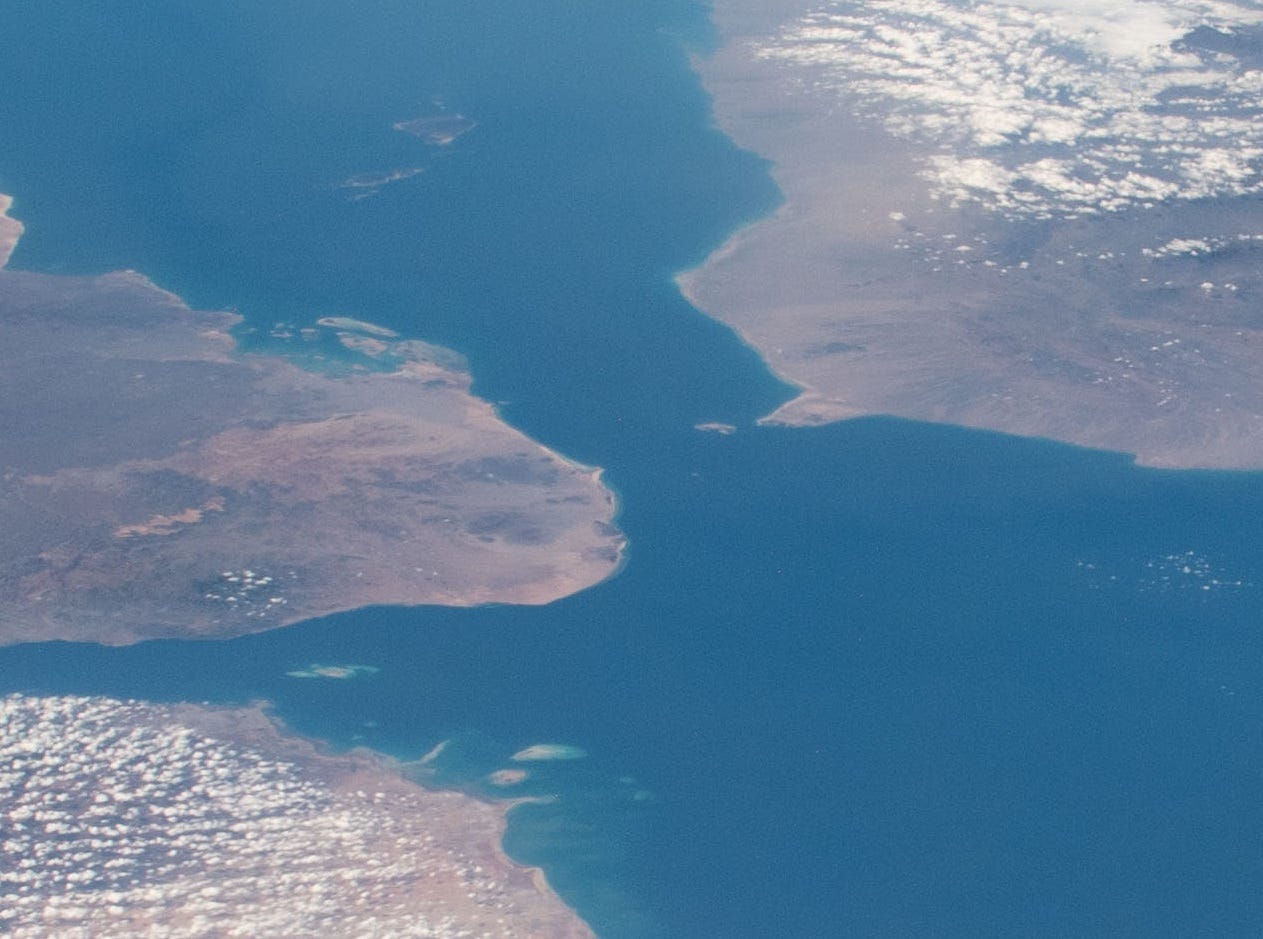
Ansar Allah held Hodeidah and much of the northern Red Sea coast. Further south, Tareq Saleh’s forces, once backed by the UAE and now part of the Saudi-led camp, held Mokha and the approaches to the Bab al-Mandeb. Whoever controls that coastline has leverage in two directions: north toward Saudi Arabia, and south over one of the world’s most important shipping lanes.
Fighting around western Taiz and southern Hodeidah picked up through August. On September 3, Ansar Allah launched a major offensive across Al-Barh, Al-Kadha, Maqbana, Jabal Habashi and southern Hodeidah, aiming to cut the Taiz–Mokha link and break through to the coast.
Government forces counterattacked with Saudi air support, claiming gains around Hays and on the Al-Barh front, while fighting spread into Ma’rib, Al-Jawf and Al-Bayda.
On September 8, Ansar Allah hit southern Saudi Arabia with missiles and drones, striking targets around Abha, Jizan, Najran and Khamis Mushait. Saudi authorities said 73 people were wounded. Ansar Allah called it retaliation for more than 100 Saudi airstrikes over three days. The same day, the government announced a counteroffensive with the stated aim of retaking Sanaa. Within two days, it was losing the coast instead.
The coast falls
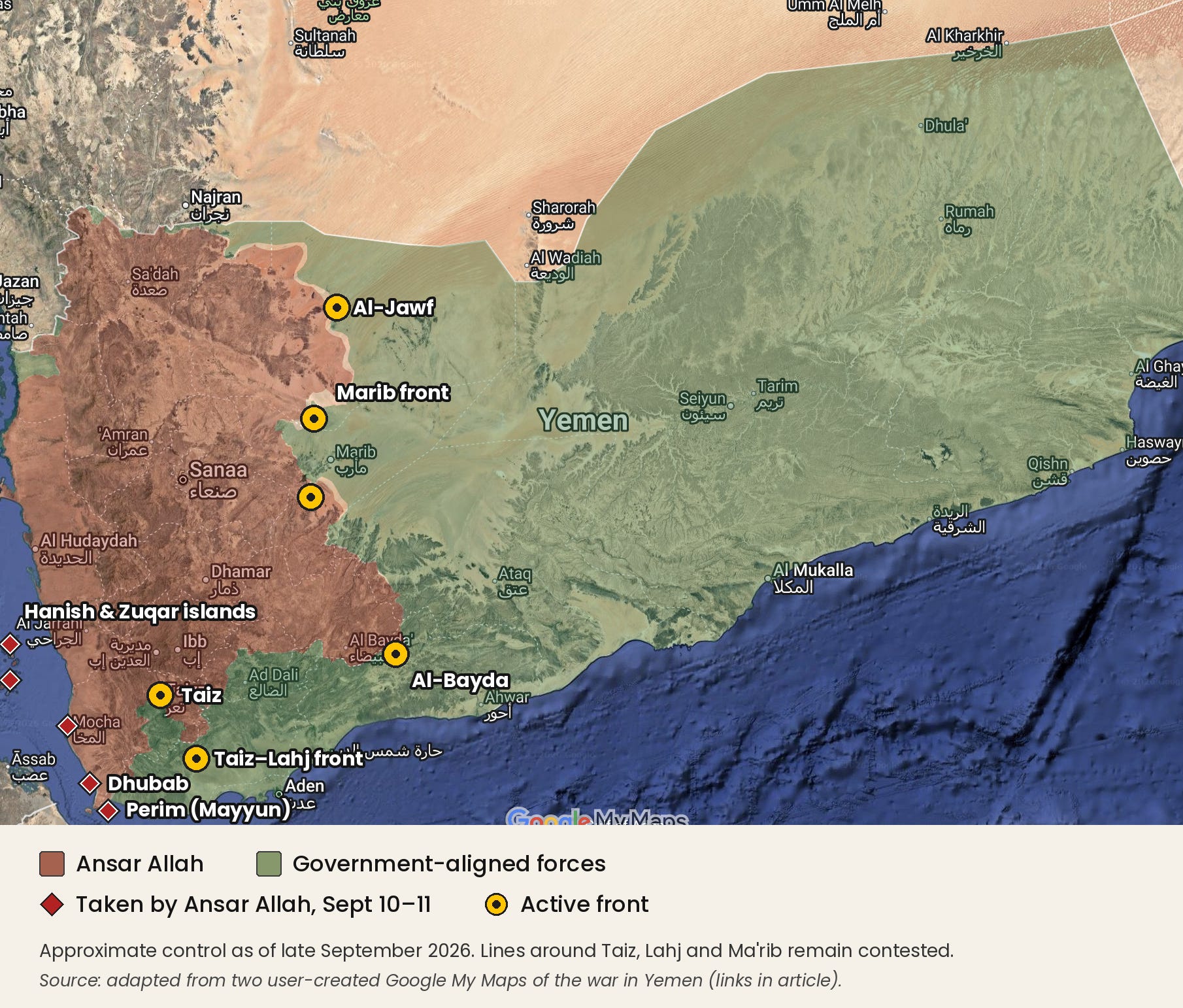
Ansar Allah took Mokha on September 10. The next day its forces moved south along the coast, taking Dhubab and Perim Island, which sits in the middle of the Bab al-Mandeb, along with other positions and islands. By its own count, it took roughly 5,400 square kilometres in two days.
The government camp was caught off guard. Forces that Saudi Arabia and its allies had spent years building withdrew from Mokha and other coastal positions, leaving Ansar Allah in control of the entire Yemeni side of the Red Sea coast and the approaches to the strait. That doesn’t mean it can close the Bab al-Mandeb at will, but it gives the group real leverage over shipping, and over the Saudi-backed government.
From there, the fighting moved inland, toward the Kahboub Mountains between Taiz and Lahj. Holding that high ground would help Ansar Allah lock in its coastal gains and protect the routes linking the coast to the interior. Progress there has been much slower. Government forces have held several positions around Taiz and Lahj, helped by difficult terrain, stronger local cohesion and heavier use of air power.
Where the fighting is
Taiz becomes the next battle
Taiz is now the most important ground front. Ansar Allah has been attacking across the governorate from several directions, especially around Jabal Habashi, Maqbana and the approaches west and southeast of the city. It may not need to storm Taiz at all; cutting its roads could be enough.
The city links the western coast to Aden and the rest of the government’s territory in the south. Severing those routes would split government forces and make Ansar Allah’s new coastal territory far easier to hold.
The pressure is already showing. Authorities have closed roads into Taiz and declared them military zones, and fighting has intensified along the routes to Aden. On October 2, government forces said they carried out 20 airstrikes on Ansar Allah positions in Taiz within three hours. They still hold the city and say they have repelled repeated attacks, but the fighting is now much closer to it, and isolation looks like the more realistic threat.
Ma’rib is under pressure too
Further east, Ma’rib is becoming another major front. It is the government’s main economic stronghold, home to much of Yemen’s oil and gas infrastructure, and one of the anti-Ansar Allah camp’s strongest remaining centres, with Islah-linked forces playing a major role.
Ansar Allah has widened its operations around the governorate, while government forces have used Ma’rib to regroup and reinforce after the coastal collapse. Fighting has also spread through neighbouring Al-Jawf and Al-Bayda.
Civilians are bearing much of it. The UN has reported shelling around displacement sites in Ma’rib that killed civilians, including children, and destroyed shelters, and WHO says Ma’rib has recorded the highest cumulative casualty burden of any governorate in this escalation. If Ansar Allah can seriously threaten Ma’rib, the government’s military and economic position becomes very hard to sustain.
The Saudi bombing campaign
Saudi Arabia has met its battlefield losses with an increasingly intense air campaign, hitting Ansar Allah positions, vehicles, communications infrastructure and troop movements across Taiz, Hodeidah, Al-Jawf and beyond. Government forces have started flying their own missions as well.
Civilians are increasingly caught in it. On September 27, a strike on a market in Taiz killed seven people and wounded around 40, including children, according to Ansar Allah’s health ministry. Earlier in September, UN officials reported shelling on displacement sites in Ma’rib that killed two children and injured 15 people.
Displacement is climbing fast. IOM estimated around 134,000 people displaced inside Yemen by September 22, and the UN now puts the figure above 152,000, many arriving around Taiz and Aden without food or water. Yemen imports around 90 percent of its food, so any disruption to roads and ports hits hard.
The war comes to Saudi Arabia
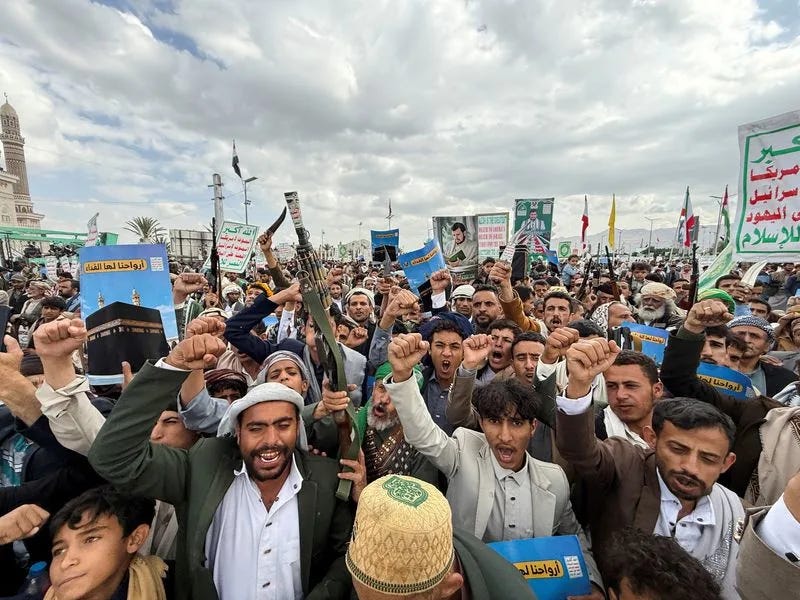
Ansar Allah has kept firing missiles and drones into Saudi territory, including at Riyadh and major energy infrastructure. Saudi Arabia has intercepted many of them, but the attacks make clear that losing the western front has raised the threat to the kingdom, not reduced it.
Saudi rhetoric has hardened to match. Riyadh has accused Ansar Allah of targeting Mecca and, more recently, a power station in Medina that supplies the Prophet’s Mosque. Ansar Allah denied it, calling the claim a cover for Riyadh’s failure to substantiate the earlier Mecca accusation.
A widening regional conflict
Saudi Arabia is drawing its partners in. On September 25, the military chiefs of Saudi Arabia, Pakistan and Turkey met in Riyadh to deepen intelligence sharing and coordination under their new joint defence pact. Pakistan has since said the three will hold an emergency meeting to discuss Iran’s suggestion of engaging Ansar Allah politically. Turkey and Pakistan are providing equipment and advisory support, and France has offered help defending Saudi territory.
Washington is providing intelligence support to Riyadh but has so far avoided a new bombing campaign of its own.
On the diplomatic side, UN envoy Hans Grundberg has been meeting the parties and regional governments, calling for the fighting to stop and for existing channels to stay open. Hamas has separately offered to mediate; Khalil al-Hayya said on September 27 that the proposal had been delivered and Hamas was awaiting a response. There’s no sign yet that it has led to talks.
Where this is heading
Reuters reported on October 2 that Saudi Arabia is preparing a major offensive, possibly within weeks, to retake the Bab al-Mandeb and break Ansar Allah’s hold on the western coast. One option focuses on the coast; another would open several fronts at once, potentially including Taiz, Ma’rib, Al-Bayda and Al-Jawf. More than 100,000 Yemeni fighters could be mobilized, with Saudi Arabia providing air support and oversight.
That puts both sides to a test. Riyadh has spent the past year pulling a fractured camp under one command; now it has to turn that into a force that can win back ground. Ansar Allah has to defend far more territory than it held before the summer, and hold the coast while fighting around Taiz, Ma’rib, Al-Jawf and Al-Bayda under sustained airstrikes.
The immediate danger for Yemen is a self-reinforcing cycle: Ansar Allah strikes Saudi territory and shipping, Saudi Arabia widens its bombing, and the government launches a ground offensive with regional backing. Diplomacy, for now, is struggling to keep pace.
As always, verified information from the front is limited. Both sides are fighting a media war alongside the real one, and battlefield claims from either should be treated with caution.